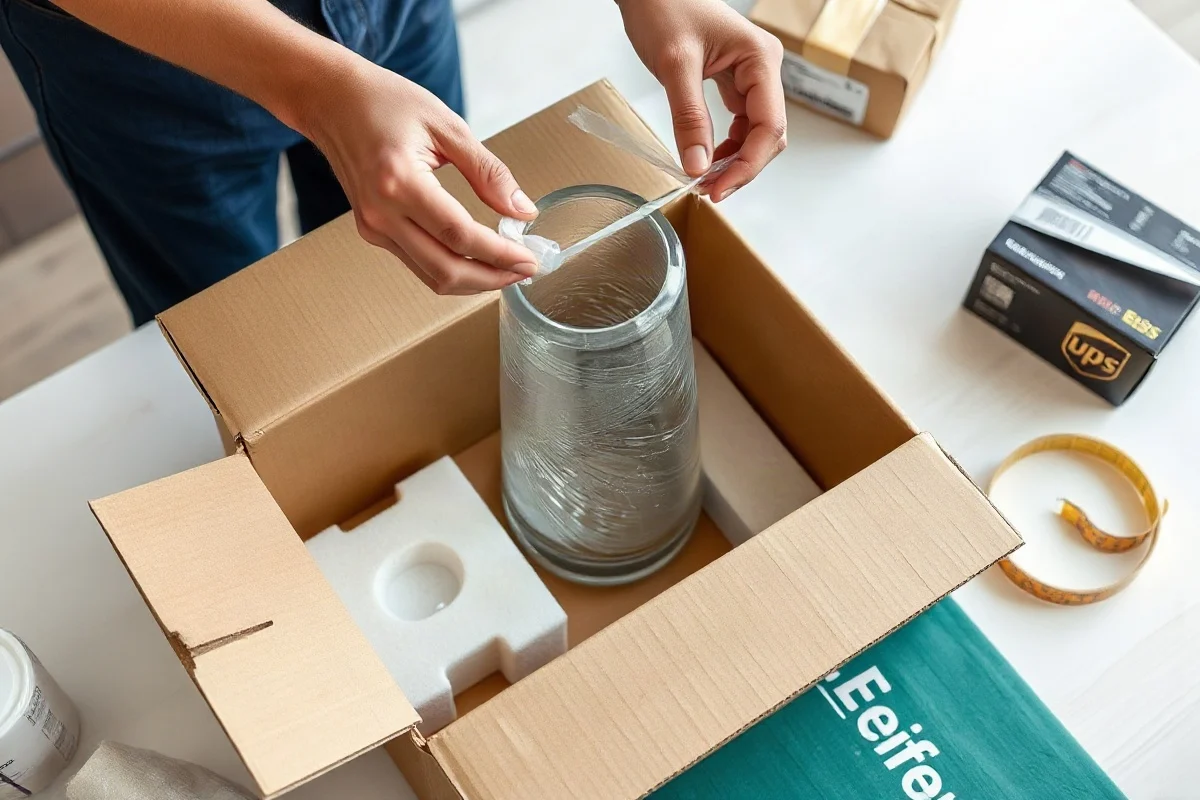
To pack fragile items for UPS shipping, choose a strong box with enough room for cushioning, wrap each item separately, prevent all movement inside the box, and seal the package securely. The goal is not simply to surround an item with packing material; it is to create a stable package that can withstand handling, vibration, stacking, and occasional impact. Before shipping, measure the finished package, weigh it, and check the current UPS requirements for your service and destination.
Start with the item and the shipping plan
Inspect the item before packing and identify its most vulnerable areas. Glass, ceramic, electronics, framed artwork, bottles, and products with protruding parts often need different protection. A thin stem, corner, screen, handle, or lid may break even when the main body appears well cushioned.
Also consider the complete shipment rather than the item alone. If the package will travel a long distance, cross several handling facilities, or include multiple pieces, use more robust cushioning and a stronger outer box. Carrier services, package requirements, additional handling practices, and charges can vary by service level, package type, destination, and date. Check the current information on the official UPS website before tendering the shipment.
Choose the right box
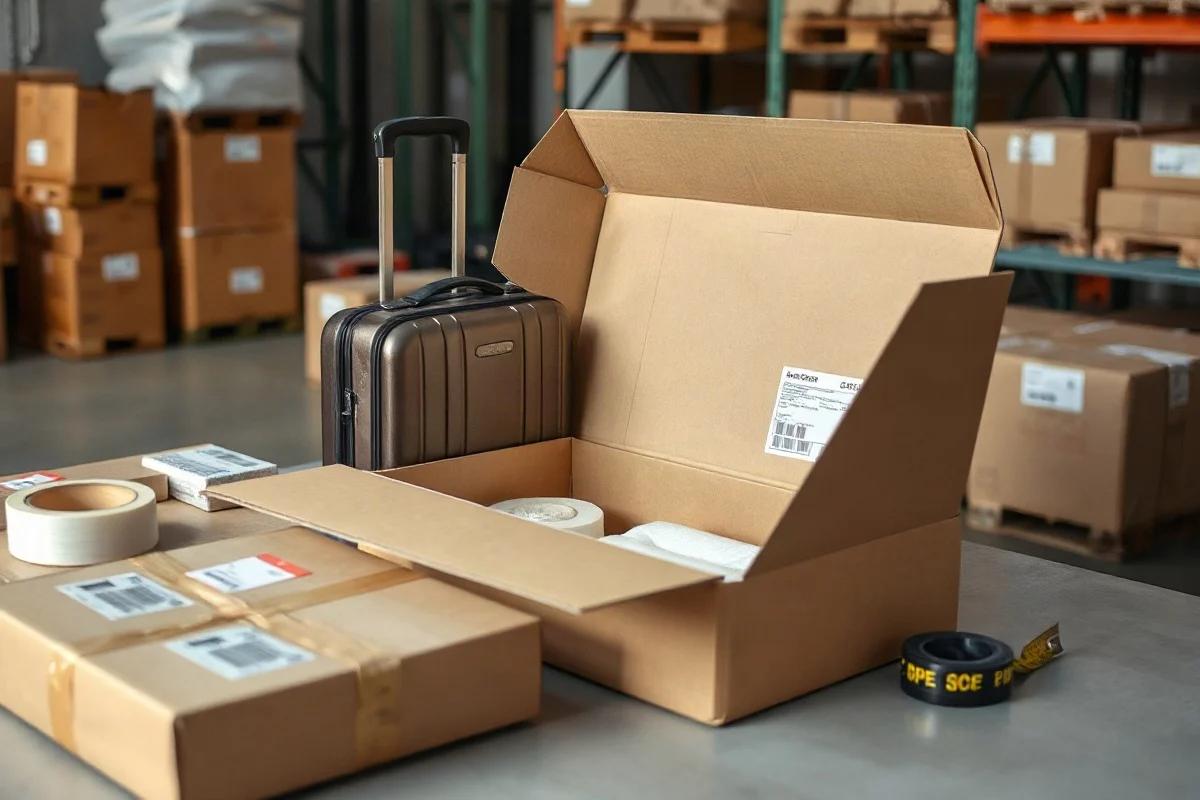
Use a new or nearly new corrugated box that is large enough to hold the item and cushioning on every side. The box should not be so large that the item can move freely, but it should leave enough space for a protective layer between the item and the outer walls. Reused boxes can work when they are dry, clean, rigid, and free from crushed corners, punctures, delamination, or old labels that could cause confusion.
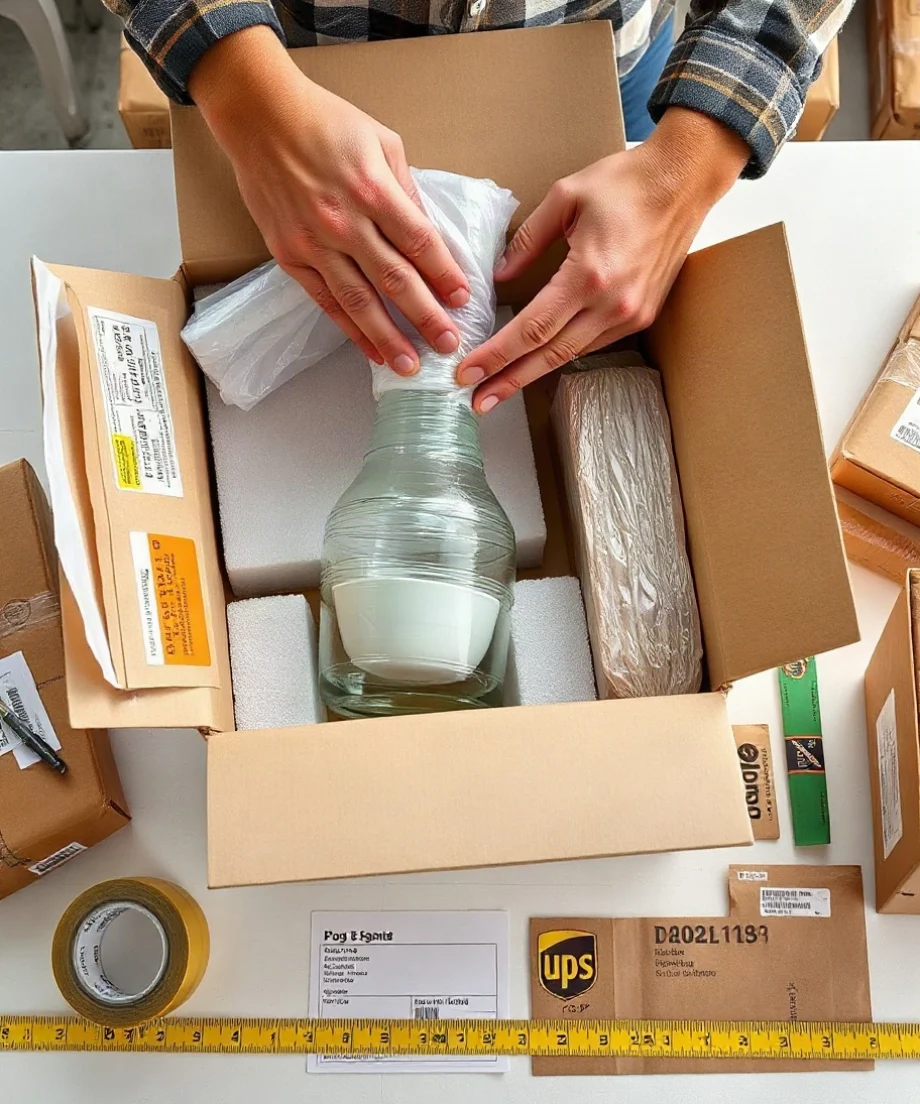
For a single fragile item, a box-in-box method can provide an additional layer of protection. In this approach, the wrapped product sits inside a smaller inner carton, which is then centered inside a larger outer box with cushioning between the two. This method uses more material and may increase the package size, so compare its protection benefits with the shipping cost.
Do not use a box that is already bowing under the item’s weight. Avoid containers with weak bottoms, open seams, or excessive height for a heavy product. A package that is too tall or wide may be harder to stabilize and may also produce a higher dimensional-weight charge.
Measure the item and calculate the packing space
Measure the item at its widest, longest, and tallest points, including handles, corners, caps, and other projections. Record the measurements in inches for most U.S. shipping calculations. Add the planned cushioning space around the item before selecting the box.
For example, suppose a product measures 10 by 6 by 4 inches and you want approximately 2 inches of cushioning around it on every side. A suitable internal space would be about 14 by 10 by 8 inches, before allowing for an inner carton, partitions, or compression of the packing material. The finished outer dimensions may be larger because the box walls and any second box add space.
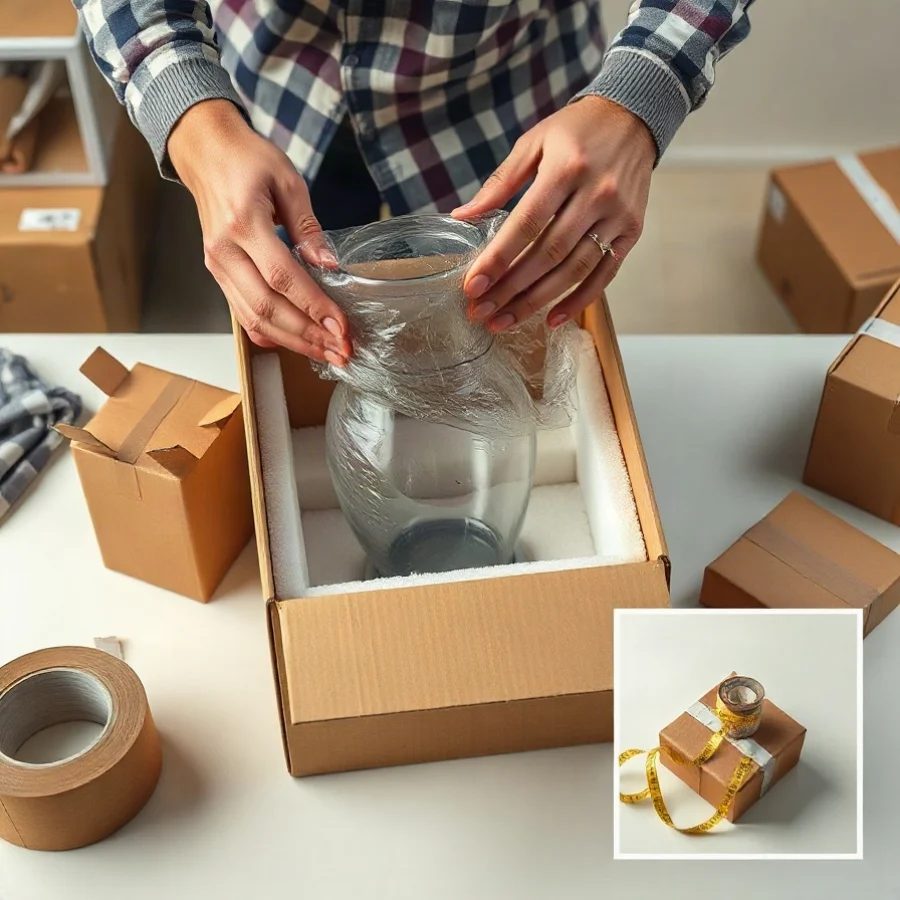
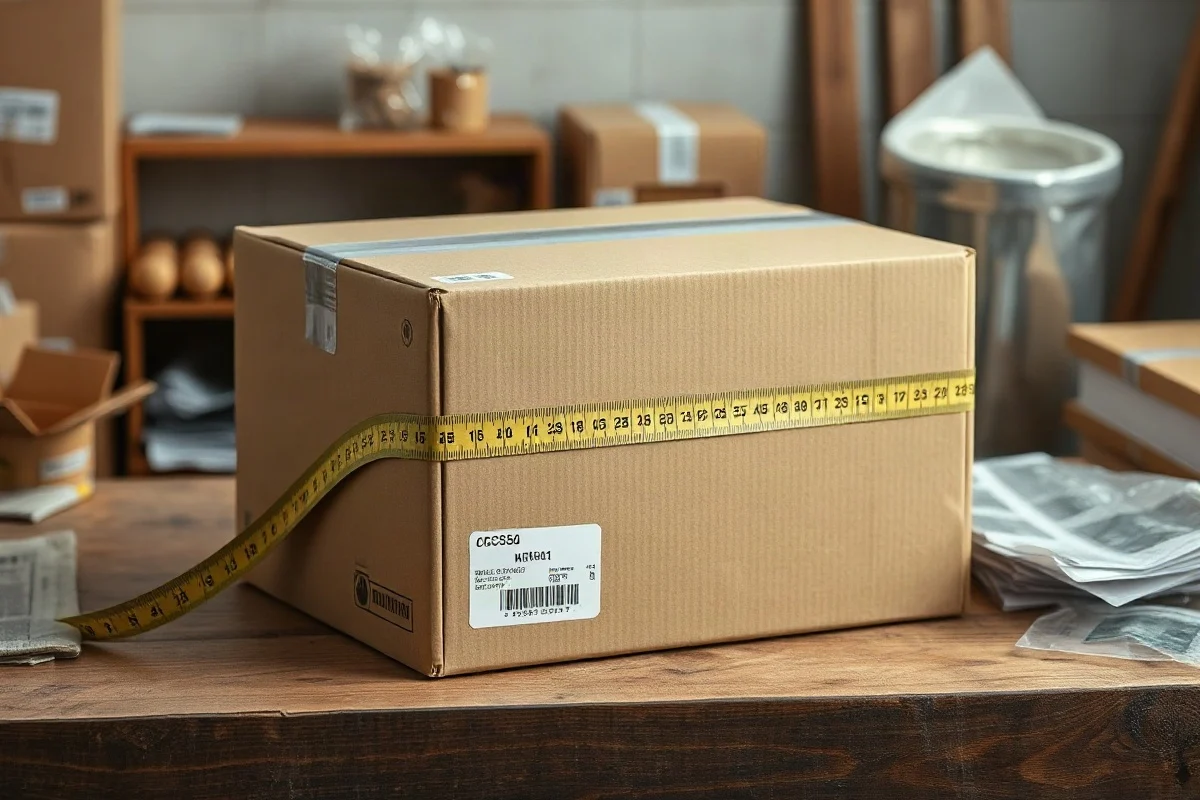
Measure the finished package from the outside, rounding each dimension according to the carrier’s current instructions when required. Measure the longest side, the side perpendicular to it, and the remaining side. Do not measure only the inside of the box. Bulging panels, loose straps, or protruding tape can affect the package’s practical dimensions and may interfere with automated handling.
For more help selecting a carton, use the box size calculator. It can help you think through product dimensions and the space needed for protective material.
Wrap the fragile item correctly
Protect surfaces first
Wrap the item in a soft, nonabrasive material before adding impact protection. This prevents scuffs from bubble wrap, paper, foam, or other packing materials. For polished surfaces, screens, painted finishes, and delicate decorations, use a clean protective layer that will not transfer ink or leave residue.
Wrap each piece separately
If a shipment contains several fragile pieces, wrap every piece on its own. Items should not touch one another, even when they are all inside the same padded container. Separate them with dividers, foam sheets, molded pulp, or rigid inserts. Place heavier pieces below lighter pieces only when a divider keeps the lower item from carrying direct pressure.
Cover corners and projections
Give extra attention to corners, edges, handles, feet, and narrow sections. Foam corners, molded inserts, or layered cushioning can protect these areas better than a single flat sheet. Keep fragile projections away from the box walls and from any opening through which tape, labels, or other packages could apply pressure.
Bubble wrap can protect many items, but it should not be the only defense for a heavy or highly fragile product. Use enough layers to create a cushion without forcing the wrapped item tightly into the box. For electronics, protect the device from scratches, static, and moisture as appropriate for the product. Do not let loose packing material block ports, switches, or removable parts unless those parts are separately protected.
Fill the box and stop movement
Place cushioning material on the bottom before adding the item. Center the wrapped product so there is protective space on every side, including above it. Fill gaps with material that will not collapse completely under the item’s weight. Paper, air pillows, foam, molded inserts, and other materials can work when selected for the item and packed tightly enough to limit movement.
After filling the side gaps, add cushioning across the top before closing the flaps. Gently shake the closed but unsealed box. If you hear or feel the item shifting, reopen the box and add or reposition material. The package should not allow the product to slide from one wall to another.
Do not rely on loose shredded paper or a small amount of soft material around a heavy object. These materials may settle during transport, leaving empty space. Similarly, do not compress delicate products directly against rigid inserts or box walls. Protection needs to absorb and distribute impact, not transfer it to the item.
Consider a double-box design
A double-box design is useful when the product is valuable, unusually fragile, heavy, or difficult to replace. First stabilize the item in an inner box. Then place that box in a larger outer carton with cushioning on all sides. The inner box should not touch the outer box, and it should not be able to slide within it.
Use a sturdy outer box with a sound bottom and strong seams. If the inner carton is heavy, provide enough bottom support so it does not break through or settle onto the outer box wall. The larger package must still be easy to close without crushing the contents.
Double boxing is not a guarantee against damage, and it does not replace proper internal cushioning. It also increases the package’s weight and dimensions. Compare the finished package with the carrier’s current size, weight, service, and surcharge rules before purchasing the label.
Seal and label the package
Close the box with pressure-sensitive shipping tape designed for corrugated cartons. Apply tape across the main center seam and across the flap edges as needed to keep them closed. Reinforce the bottom before placing the item inside, especially when the contents are dense or heavy. Avoid relying on household cellophane tape, masking tape, string, or decorative ribbon as the primary closure.
Place the shipping label on a single flat surface. Keep it away from seams, corners, edges, and areas that could be covered by tape. Remove or fully cover old labels and barcodes so the package is not misrouted. If you use a fragile marking, treat it as a handling reminder rather than a substitute for internal protection. Follow any current UPS labeling and documentation instructions for your shipment.
Check dimensions, weight, and dimensional weight
Weigh the sealed package, not just the product. Then measure the outside length, width, and height. Shipping charges may depend on actual weight, dimensional weight, or other service-specific factors. The dimensional-weight calculation generally uses the package’s cubic volume divided by a carrier- and service-specific divisor, but the applicable divisor and billing rules can change. Do not assume that a familiar number applies to every UPS service or shipment.
You can review the basics with this dimensional weight calculator. Use the result as an estimate, then confirm the current UPS rules for the service you plan to use. If the package is close to a size or weight threshold, measure carefully and leave a margin rather than depending on a borderline measurement.
Before booking the shipment, compare the packed dimensions with the current UPS limits and conditions for the selected service, destination, and package type. Some shipments may have special requirements or additional charges. Because these details can change, the official UPS source should be the final reference.
Perform a final drop-and-movement check
A simple home inspection can reveal weak packing. Lift the sealed package and check whether the bottom flexes, the flaps separate, or the contents shift. Turn the box gently in different directions. You should not hear glass, metal, or hard components striking the walls.
Do not perform a test that could damage a valuable item. Instead, inspect the cushioning and closure method. Look for direct paths from the product to the box walls, compressed corners, exposed projections, and gaps around the top. Correct those problems before shipment.
For valuable or irreplaceable contents, photograph the item, the internal cushioning, the sealed package, and the label before handing it to the carrier. Keep the receipt, tracking information, packing details, and any required documentation. These records do not prevent damage, but they can make a shipping inquiry easier to document.
Common mistakes to avoid
- Using a box that is too large without enough cushioning to keep the item centered.
- Allowing fragile pieces to touch each other inside one carton.
- Wrapping the product but leaving its corners or projections exposed.
- Using a soft envelope for an item that needs a rigid protective box.
- Filling the top but forgetting to cushion the bottom and sides.
- Reusing a crushed, damp, or weakened carton.
- Placing the label over a seam, edge, or old barcode.
- Estimating the shipping size from the product instead of measuring the finished package.
- Assuming that a fragile sticker replaces proper packing.
Good UPS packaging is a balance between protection, stability, and efficient size. Select a sound box, wrap every component, cushion all sides, eliminate movement, seal the carton well, and verify the finished dimensions and weight. For related guidance, browse the UPS Package Guide and review the current UPS requirements before shipping.
Comments
0No comments yet. Be the first to share a helpful note or question.
Leave a Comment
Your email address will not be published. Comments are reviewed before appearing on the site.