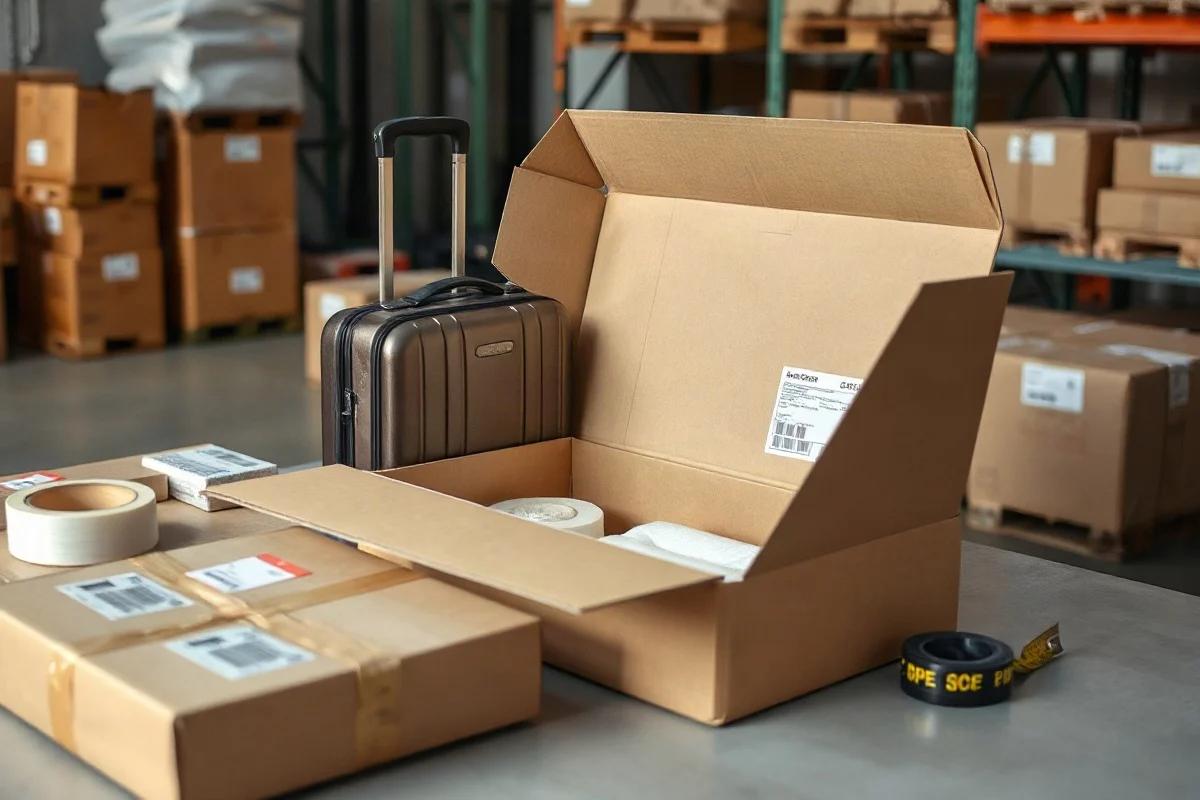
Yes, you can generally ship a suitcase with UPS, but the safest approach is to place the suitcase inside a strong corrugated shipping box rather than sending the luggage on its own. A suitcase can be treated as a package when it is properly prepared, labeled, and within the current size and weight limits for the UPS service you choose. Requirements and charges can vary by service, destination, package shape, and date, so check the current UPS terms and rate details before handing it over.
Shipping a suitcase is useful when you are moving, sending luggage ahead for a trip, returning a bag, or transporting personal items without checking the suitcase at an airport. The main challenges are protecting the suitcase from conveyor-belt handling, measuring its actual shipping size, and estimating charges based on both physical weight and dimensional weight.
Should You Ship the Suitcase by Itself?
You may be able to send a suitcase without placing it in a box, but that does not make it the best option. An exposed suitcase can be scraped, scuffed, or caught during handling. Its handles, wheels, straps, and zippers may also create weak points. A loose luggage tag can tear off, and a suitcase may be difficult to identify if the shipping label becomes damaged.
A box provides several advantages:
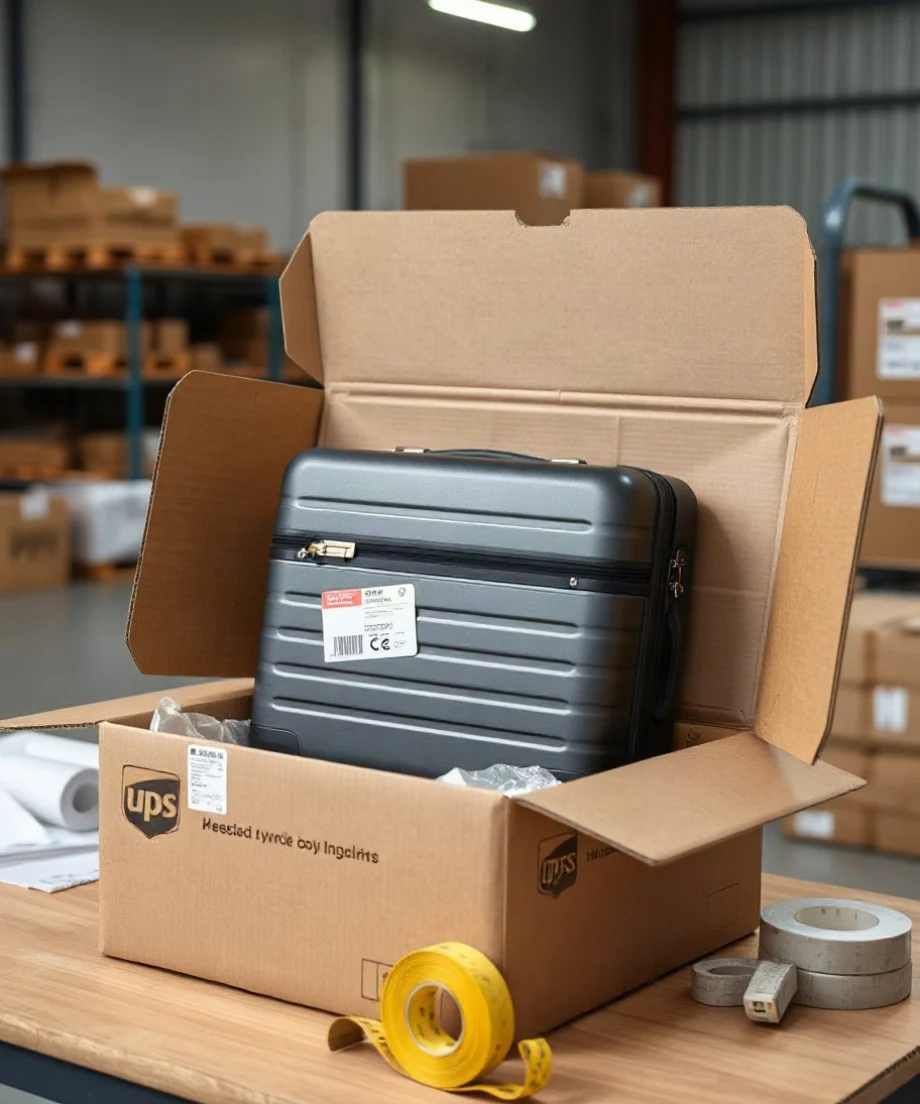
- It protects wheels, handles, corners, and exterior panels.
- It creates a flat surface for the shipping label.
- It reduces the chance that straps or protruding parts will catch on equipment.
- It makes the package easier to measure and seal.
- It provides room for cushioning and a second address label inside the shipment.
If you do ship the suitcase without a box, remove or secure loose straps, cover vulnerable parts, and attach the label to a broad, smooth surface. Consider placing a duplicate label with the sender and recipient information inside the suitcase as a backup. Before using this method, ask the UPS location or service representative whether the package format is acceptable for the service you selected. Acceptance at one location is not a guarantee that every service or destination will handle the item the same way.
How to Measure a Suitcase for UPS Shipping
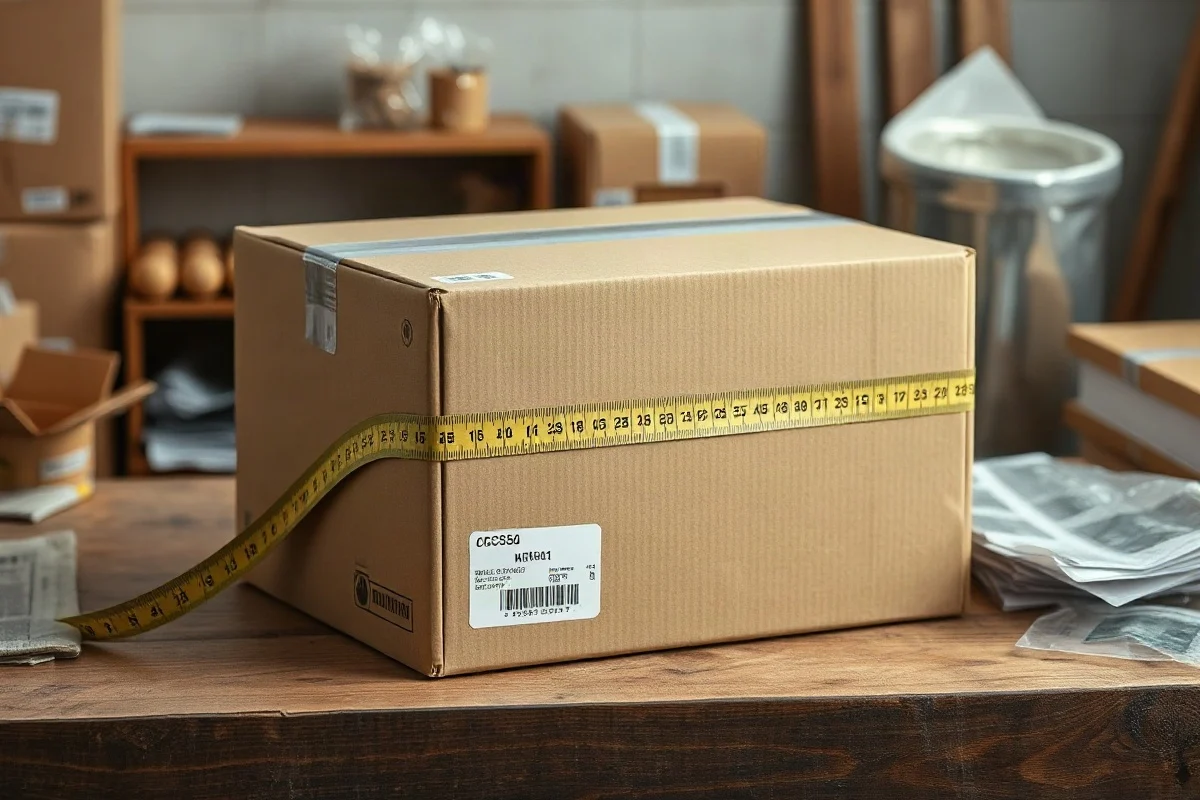
Measure the finished package, not just the empty suitcase. If the suitcase is boxed, use the outside dimensions of the sealed box. If it is shipped without a box, measure the greatest outside length, width, and height, including wheels, handles, pockets, protective wrap, and any other parts that extend from the main body.
Measure length, width, and height
Place the package on a flat surface and identify its three dimensions:
- Length: the longest side of the package.
- Width: the next-longest side when the package is positioned normally.
- Height: the remaining side, measured from the bottom to the top.
Measure to the nearest practical fraction of an inch, then round up when a carrier's measurement or rating system requires whole-inch values. Do not rely on the suitcase manufacturer's advertised dimensions if the bag has expanded compartments, exterior pockets, wheels, or a telescoping handle. Those features can change the final shipping measurements.
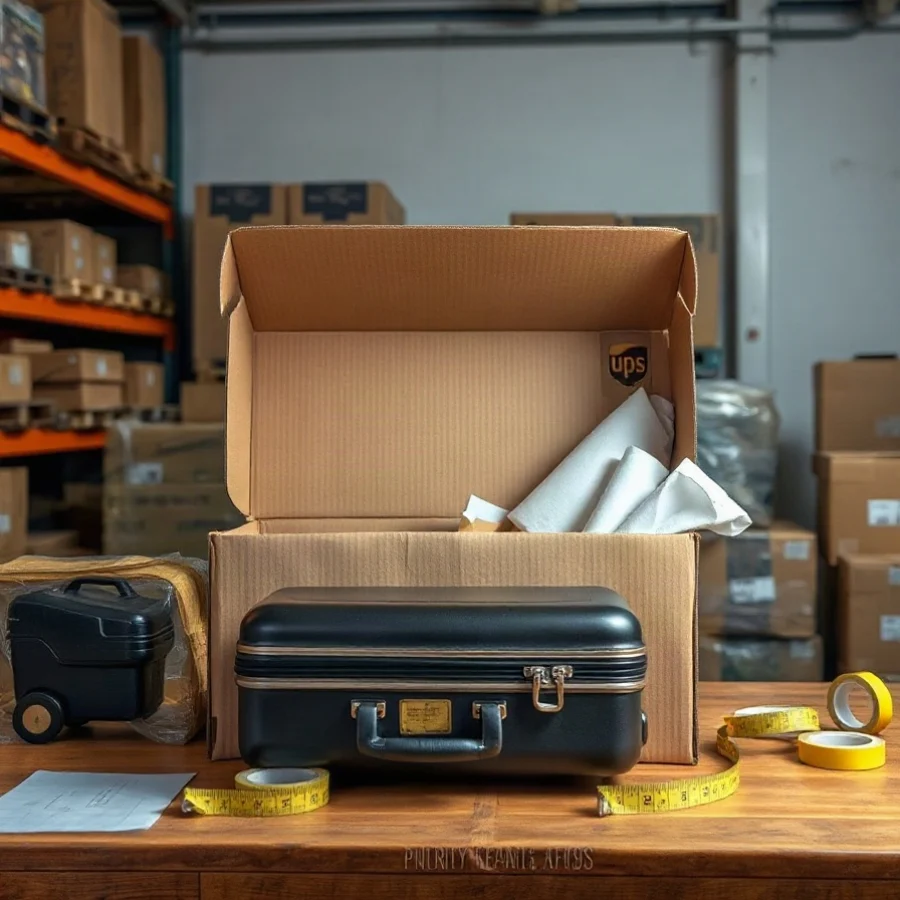
For a boxed suitcase, measure after the box is closed and taped. Bulging cardboard, uneven packing, or a lid that does not sit flat can increase the package's effective dimensions. If you need help comparing measurements, the package dimensions guide explains how to identify the correct outside dimensions for shipping.
Calculate dimensional volume
Carriers may price some packages using dimensional weight, which reflects the amount of vehicle or aircraft space a package occupies. The basic volume calculation is:
Length × width × height = cubic inches
The carrier then applies the dimensional-weight divisor for the applicable service and shipment. That divisor is not universal, and it can vary by service, destination, package type, or current tariff. Because it may change, use the divisor shown in the current UPS rate information rather than relying on an old example from another shipment.
For example, suppose a boxed suitcase measures 30 × 20 × 12 inches. Its cubic volume is:
30 × 20 × 12 = 7,200 cubic inches
That number is not itself the shipping charge or final billable weight. Compare the package's actual weight with the dimensional weight calculated under the applicable UPS rules. The rating method generally uses whichever applicable weight produces the higher billable result, but the exact treatment can depend on the service and current terms. You can use a dimensional weight calculator for an estimate, then confirm the result with the current UPS quote.
Check UPS Size, Weight, and Service Requirements
Before packing, review the current requirements for the specific UPS service you intend to use. Do not assume that a suitcase qualifies under every UPS service simply because another suitcase was accepted previously. Limits and additional handling rules may vary based on the service level, origin, destination, package dimensions, weight, and whether the shipment is domestic or international.
Pay special attention to:
- Maximum package weight for the selected service.
- Maximum length and combined-dimension requirements.
- Additional handling or large-package rules.
- Whether the destination has special restrictions.
- Prohibited or restricted contents inside the suitcase.
- Declared value, claims, and liability terms.
A suitcase filled with clothing is different from a suitcase containing batteries, liquids, aerosols, food, medication, electronics, or other regulated or fragile items. International shipments can require customs documentation and may be subject to additional restrictions. Check the current official UPS guidance for the shipment's origin, destination, contents, and service before sealing the package.
How to Pack a Suitcase Inside a Box
A double-wall corrugated box is often a practical choice for a heavy or valuable suitcase, provided the box is large enough to close without forcing it. Reusing a luggage box can work if it is clean, dry, rigid, and free from crushing or water damage. Do not use a box whose seams are separating or whose corners are soft.
1. Empty and inspect the suitcase
Remove prohibited, restricted, or unnecessary contents. Check every pocket, including the lining, exterior compartments, and shoe sections. Locking a suitcase can create problems if the carrier or a government agency needs to inspect it, so follow the current instructions for the shipment type and destination. Keep a written inventory and photograph valuable items before closing the bag.
2. Protect vulnerable parts
Retract the telescoping handle if possible. Wrap wheels, handles, buckles, and hard corners with bubble cushioning, foam, or another suitable protective material. Use enough padding to prevent the parts from pressing directly against the box. Avoid leaving large empty spaces where the suitcase can shift during transport.
3. Cushion the suitcase
Place cushioning around all sides, especially the top and bottom. The suitcase should not touch the inside walls of the box. Fill voids with packing paper, air pillows, foam, or another material that will not collapse immediately under the package's weight. Clothing inside the suitcase can provide some protection, but it should not be the only cushioning for rigid or breakable contents.
4. Seal the box correctly
Close the box without bulging. Apply pressure-sensitive shipping tape across every major seam, including the center seam on the top and bottom. For a heavy suitcase, reinforce the seams with additional strips, but do not wrap the package so thoroughly that the shipping label or barcode is difficult to scan.
5. Label the package
Place the shipping label on the largest flat surface. Do not put it across a seam, corner, tape edge, or curved area. Remove old labels and barcodes from a reused box. Add the sender's and recipient's full addresses, including apartment or suite information when applicable. A duplicate address sheet inside the box is a useful backup, but it does not replace the outside label.
How Much Does It Cost to Ship a Suitcase?
There is no single price for shipping a suitcase. The total can depend on the package's actual weight, dimensional weight, origin, destination, delivery speed, package measurements, selected service, and any applicable surcharge or additional handling charge. A large suitcase may cost more than expected even when it is not especially heavy because its box occupies substantial space.
To estimate the cost, gather these details:
- Origin ZIP Code and destination ZIP Code or country.
- Finished package length, width, and height.
- Actual weight after packing.
- Desired delivery timeframe.
- Whether the shipment is domestic or international.
- Any declared value or special service requirements.
Enter the information into the current UPS rate tool or obtain a quote from an authorized shipping location. Online estimates may differ from the final amount if the carrier measures the package differently, applies a surcharge, or finds that the shipment does not qualify for the selected service. For broader guidance on UPS measurements and package preparation, see the UPS package guide.
Tips for Shipping a Suitcase Safely
- Ship early: Leave extra time for delays, address corrections, inspections, or a missed delivery.
- Use a complete address: Include the recipient's name, street address, unit number, city, state, and ZIP Code.
- Keep tracking information: Save the tracking number and shipment receipt until delivery is confirmed.
- Photograph the package: Take pictures of the contents, cushioning, sealed box, and label before tendering the shipment.
- Do not overpack: Extra cardboard and padding can increase dimensions and therefore affect the billable weight.
- Protect fragile contents separately: A suitcase is not a substitute for individual wrapping and internal cushioning.
- Verify insurance or declared value terms: Coverage rules can differ, and some contents may have exclusions or documentation requirements.
If the suitcase is needed immediately at a travel destination, compare the shipping timeline with airline baggage or another delivery option. The cheapest quoted service may not be the most useful if it arrives after the traveler does. For a move or long-term storage shipment, also compare the cost of sending a packed suitcase with shipping an appropriate moving box.
When a Suitcase May Not Be the Best Package
Shipping a suitcase can be practical, but it is not always the most efficient choice. A soft-sided bag with flexible walls may become oversized when stuffed. An old suitcase may fail under the weight of its contents. A very large case may trigger handling requirements or cost more because of its volume. In those situations, a properly sized shipping box may offer better protection and a lower dimensional-weight result.
For a short trip, mailing only the items you can replace easily may also be safer than sending irreplaceable documents, jewelry, medication, or sentimental belongings. Keep essential travel documents and critical medication with the traveler unless a qualified professional has confirmed that shipping is appropriate.
The practical answer is straightforward: UPS may be able to carry your suitcase as a package, but box it whenever possible, measure the completed package, calculate both actual and dimensional weight, and verify the current UPS rules for the exact service and destination. That preparation helps prevent unexpected charges, damaged luggage, and delivery problems.
Comments
0No comments yet. Be the first to share a helpful note or question.
Leave a Comment
Your email address will not be published. Comments are reviewed before appearing on the site.